Partial Knee Replacement Surgeon
Outcomes from unicompartmental knee arthroplasty (UKA), also called partial knee replacement, have improved dramatically in the last 10 years. Dr. Ramkumar is trained to perform partial knee replacements from many different designs but exclusively uses the MAKO robotic arm, as the best evidence for positive outcomes exist from this specific procedure. Dr. Ramkumar is located in Long Beach and serves patients in Los Angeles, Orange County, and surrounding Southern California areas. Contact Dr. Ramkumar’s team today!

What is a unicompartmental knee arthroplasty (UKA) or partial knee replacement?
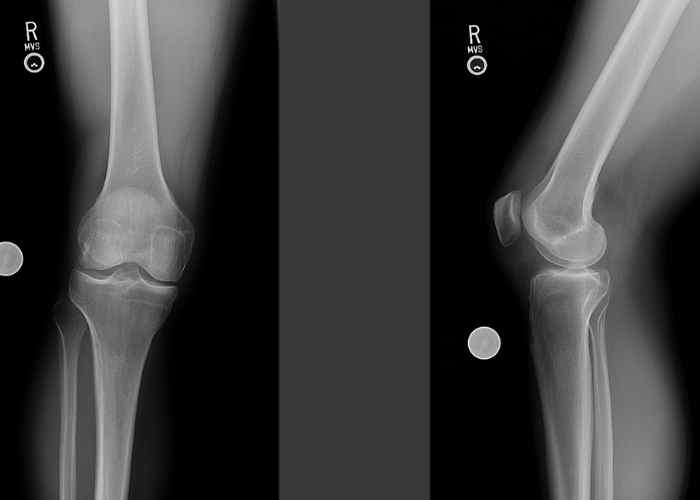
There are three “compartments” that make up the knee:
- Medial (inside of the knee)
- Lateral (outside of the knee)
- Patellofemoral (front of the knee under the kneecap and above the thighbone)
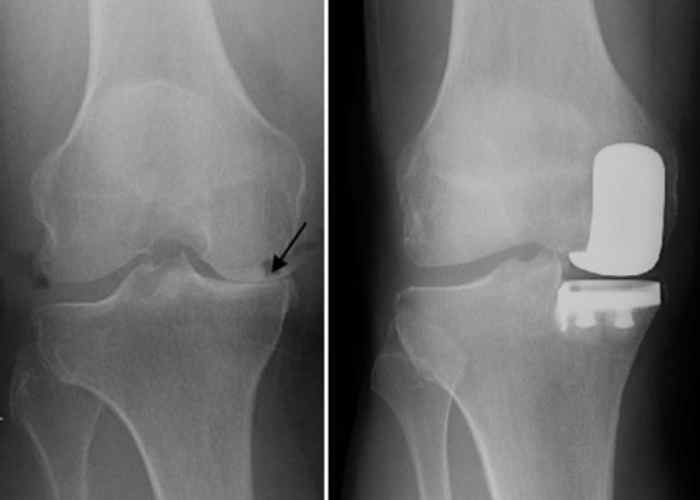
Osteoarthritis may occur anywhere between one of these compartments (unicompartmental arthritis) or between all of them (global arthritis). If conservative treatments fail to provide relief or restore mobility to the knee joint, surgical intervention may be beneficial. Unicompartmental knee arthroplasty, also called partial knee replacement, is one option designed to replace only the damaged knee compartments. New metal covers will cover the worn-down surfaces of the femur and tibia, and a plastic insert will act as the new meniscus. The new frictionless surfaces restore motion and relieve pain. Research has dramatically changed over the last 10 years with respect to partial knee replacement, in part due to improved implant design, surgical execution, and better long-term evidence. To date, the best evidence exists for partial knee replacements performed using Mako robotic-assisted technology. Dr. Ramkumar is trained to perform partial knee replacements from many different designs but exclusively uses the MAKO robotic arm for this reason. Dr. Prem N. Ramkumar, partial knee replacement surgeon, is located in Long Beach and serves patients in Los Angeles, Orange County, and surrounding Southern California areas.
Types of Partial Knee Replacement
What is a Medial Partial Knee Replacement?
A medial partial knee replacement is done on the inner (medial) side of the knee, which is the most common area of the knee affected by arthritis. Instead of replacing the entire joint, only the damaged portion is replaced. This helps preserve the healthy bone and ligaments, while removing the portion that has osteoarthritis. This approach often allows for a more natural-feeling knee, quicker recovery, and improved function for appropriately selected patients.
What is a Lateral Partial Knee Replacement?
A lateral partial knee replacement is done on the outer (lateral) side of the knee. While less common than medial arthritis, patients with isolated lateral bone damage can benefit from this very targeted procedure. By saving the areas of the knee that are unaffected by arthritis or other damage, patients may experience better joint mechanics, faster recovery, and a return to daily activities with less disruption.
What is Patellofemoral Partial Knee Replacement?
A patellofemoral partial knee replacement is designed to treat arthritis behind the kneecap (patella) and the front of the thigh bone. This is a partial knee replacement that is ideal for patients with pain isolated to the front of the knee. This type of knee pain becomes worse with activities like climbing stairs or sitting for long periods. By resurfacing only this portion of the joint, the surgery helps relieve pain while maintaining the rest of the knee’s natural structure.
What is MAKO robotic partial knee replacement surgery?
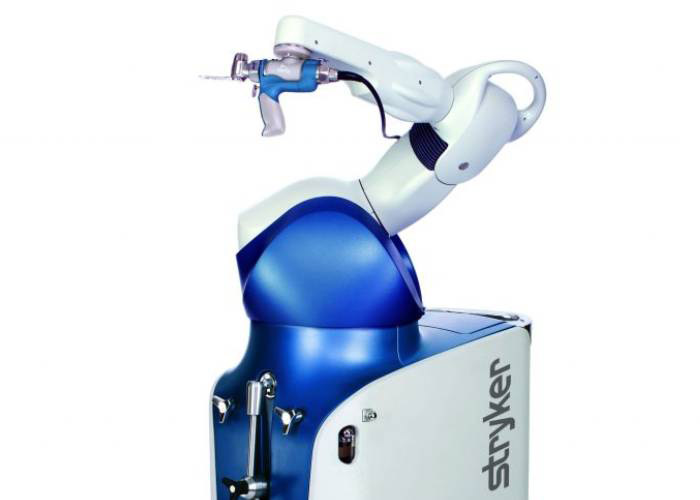
MAKO refers to the MAKO robotic-arm-assisted surgery system by industry leader, Stryker. It assists Dr. Ramkumar with pre-planning the partial knee replacement using a 3-D model of the patient’s knee. During surgery, Dr. Ramkumar uses the MAKO robotic arm to remove the diseased parts of the knee while preserving healthy bone and tissue. The MAKO then helps Dr. Ramkumar find the ideal position and size of the knee implant down to the half millimeter and half degree with respect to your specific anatomy. Dr. Ramkumar uses the MAKO system because it is best supported in the literature in terms of minimizing complications, restoring normal function, and limiting pain.
What is a Robotic-Assisted Partial Knee Replacement?
A robotic-assisted partial knee replacement is an advanced surgical technique that Dr. Prem Ramkumar uses to help plan and perform the procedure with a high level of precision. The computer technology helps him achieve an exact placement of the perfectly-sized prosthetic parts for the knee. Before surgery, detailed imaging is used to create a personalized blue-print or surgical plan, based on the patient’s unique anatomy. During the procedure, the robotic system assists Dr. Ramkumar in accurately placing the implant and preserving healthy bone and tissue. The goal of this highly specialized surgery is to improve alignment, enhance joint function, and support a smoother recovery while maintaining a natural-feeling knee.
Who is a candidate for a partial knee replacement?
A partial knee replacement is best suited for patients whose arthritis is limited to one area of the knee: medial, lateral, or patellofemoral. The rest of the joint needs to be healthy and arthritis-free. Ideal candidates typically have good ligament stability, maintained range of motion, and have not found relief with conservative treatments such as physical therapy, medications, or injections. Most importantly, this is a much more “natural” feeling knee that allows for patients to return to high-impact sports and fitness activities. This option is often recommended for active individuals who want to relieve pain while preserving as much of their natural knee as possible. One of the best examples of a patient who returned to high demand sports after a partial knee replacement is Lindsey Vonn.
Who is a candidate for a unicompartmental knee arthroplasty /partial knee replacement?
Patients with severely symptomatic unicompartmental arthritis, minimal deformity, relatively normal range of motion, intact stabilizing ligaments (anterior and posterior cruciate ligaments, medial collateral ligament, posterolateral complex), and no uncontrolled inflammatory arthropathy are typically excellent candidates for partial knee replacement. There are rare exceptions to this rule. If you do not fall into this category, you may be better served with a total knee replacement.
Unicompartmental Knee Arthroplasty (UKA) Surgical Photos
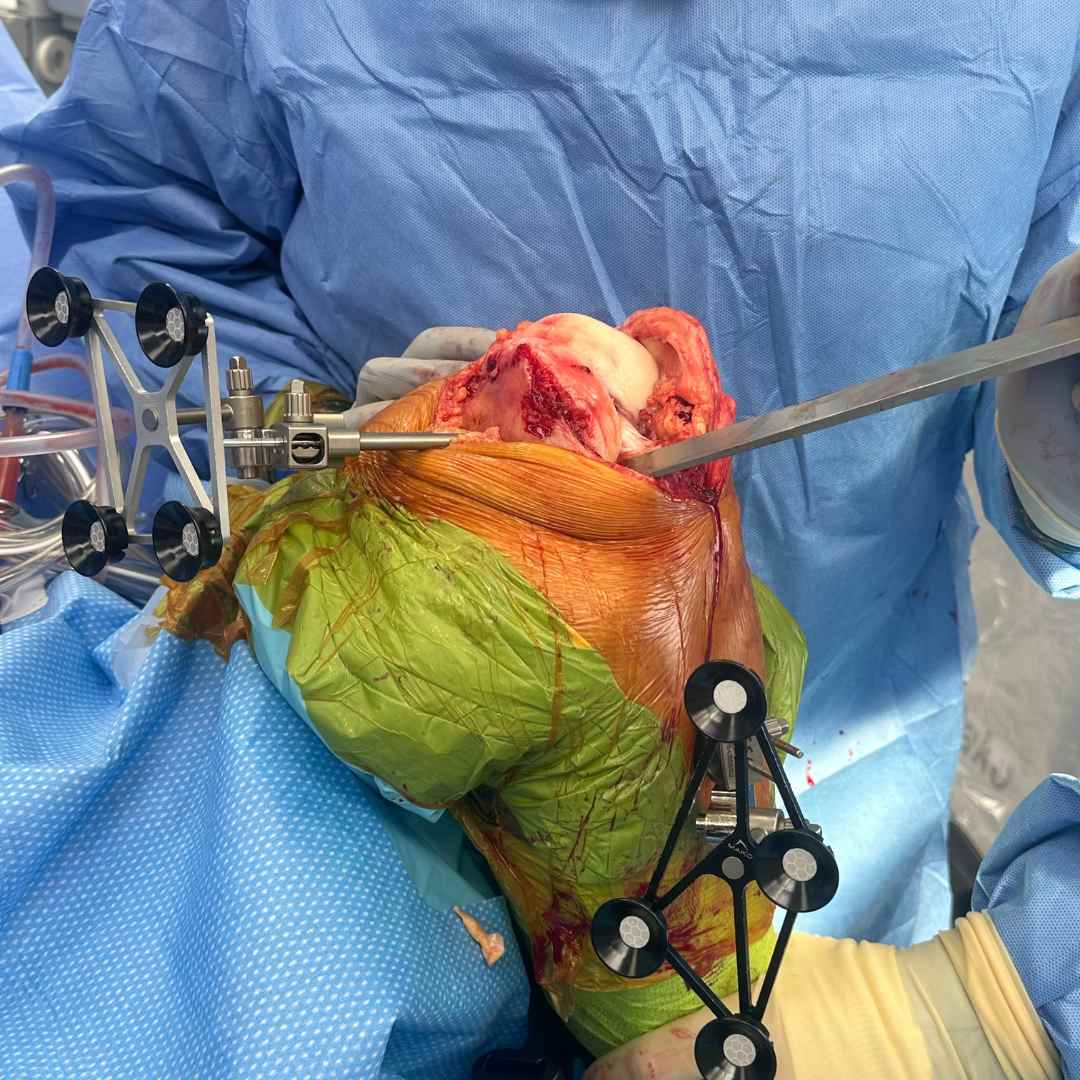
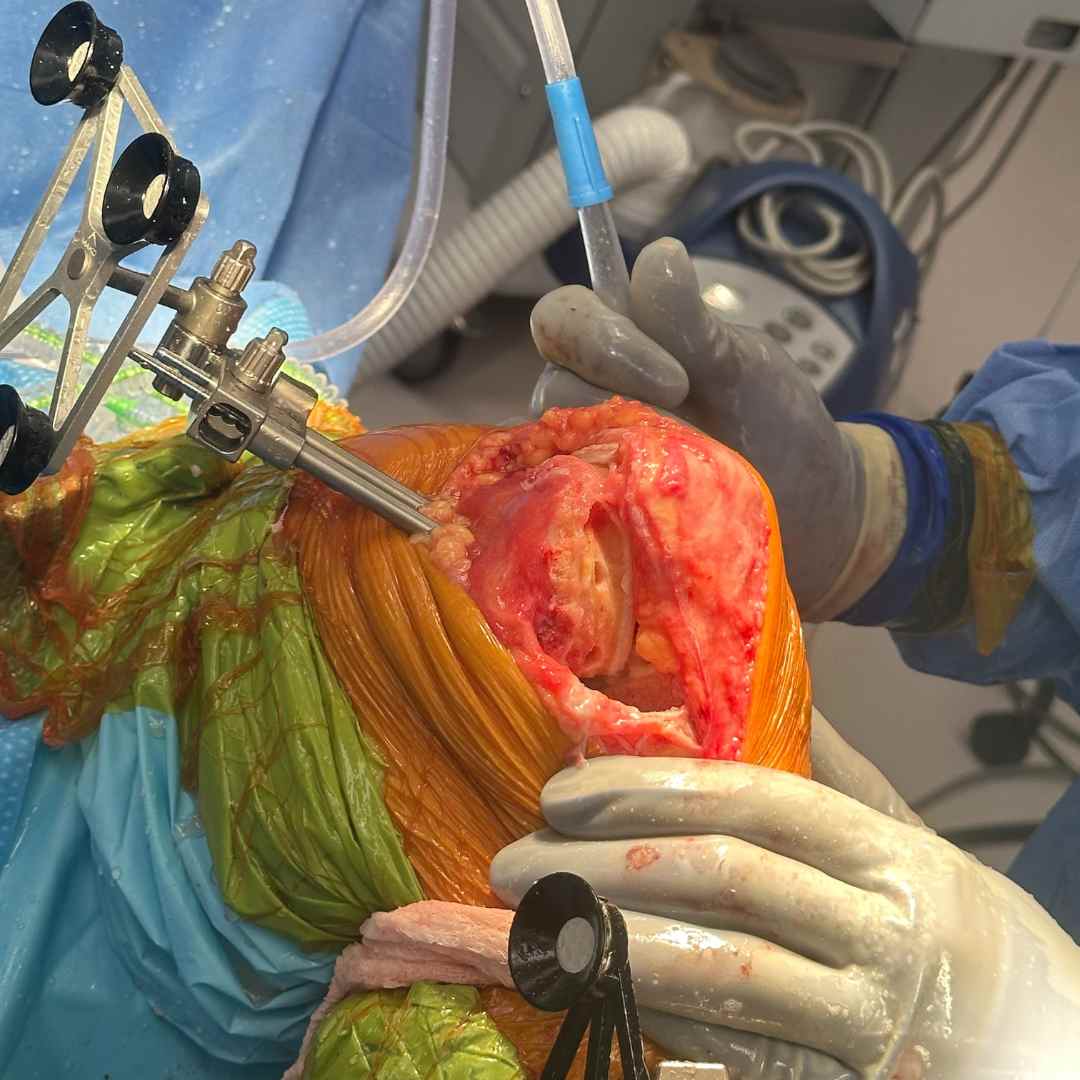
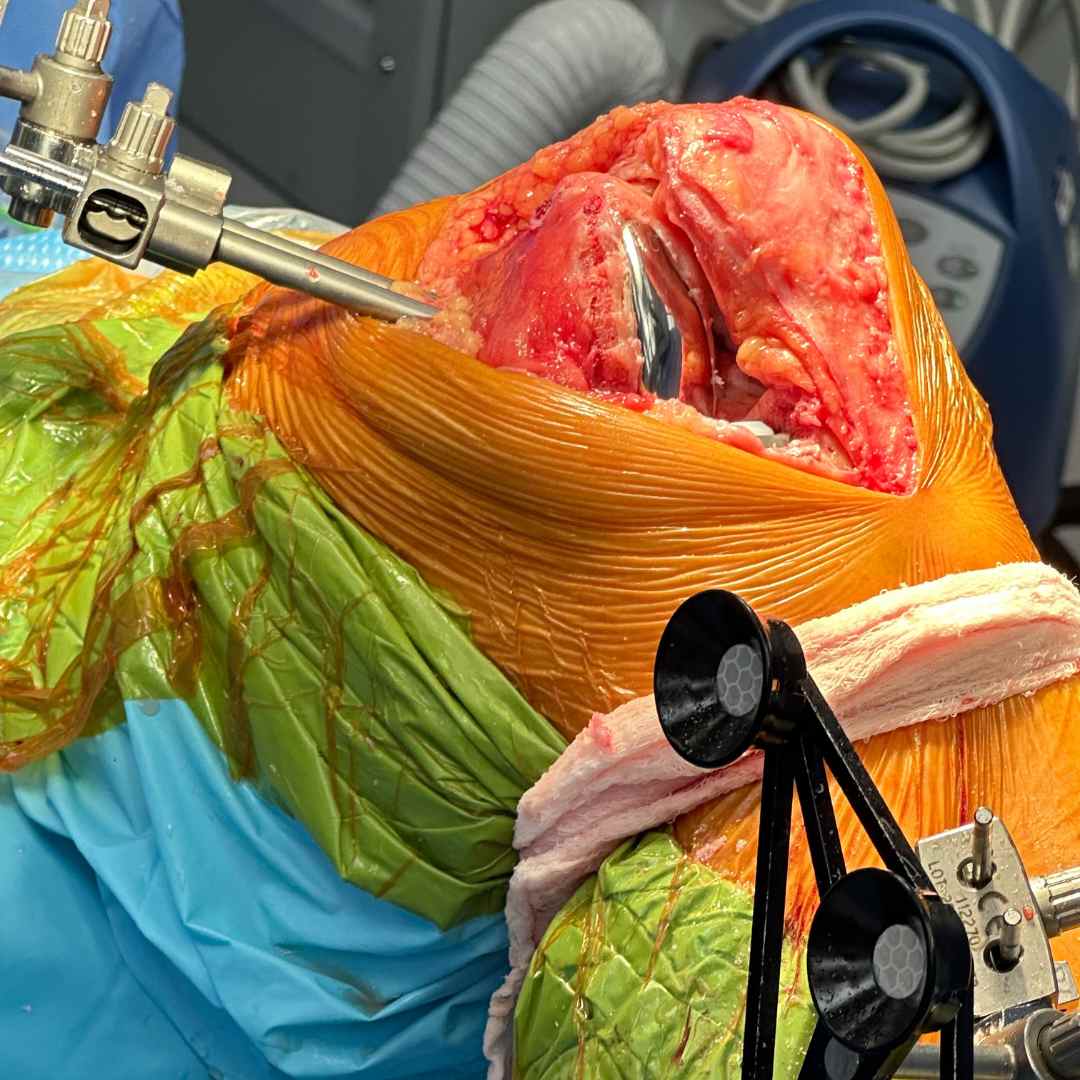
Posted with patient consent.
Partial Knee Replacement vs Total Knee Replacement
If I am a candidate for either, should I get a partial knee or a total knee replacement?
This is a personal decision and our understanding is evolving. Partial knee replacements were historically reserved for a unique patient population. Now, we know better after much research, technological advancement, and technique advancement.
If one is fortunate enough to be a candidate for a partial knee replacement, the literature consistently shows that a partial knee replacement results in: quicker recovery, a more natural feeling knee, allows for more normal movements, and permits higher demand activities like sports. Compared to a total knee replacement, however, there is a 2-5% higher risk of the partial knee replacement eventually needing to be converted to a total knee replacement if arthritis in the other compartments progress. This risk increases as time goes on, and we are not yet able to reliably predict who these patients are. However, a partial knee replacement – like a total knee replacement – can last 20-30 years or more! Should you need a conversion to a total knee replacement, the literature shows that patients do as well with the total knee replacement as if they never underwent previous surgery.
Recovery After MAKO Partial Knee Replacement
Some patients spend a day or two in the hospital after a partial knee replacement, while others go home the same day. You will be sent home with crutches or a walker and given specific instructions to reduce pain and swelling. Weight-bearing is encouraged immediately after surgery, and you should be able to walk without any assistance within a few weeks.
Dr. Ramkumar will recommend physical therapy to help you regain strength and restore mobility.
What can I expect before and after unicompartmental knee arthroplasty (UKA) surgery?
Dr. Ramkumar emphasizes the importance of establishing clear expectations and providing comprehensive pre- and post-surgery education. This proactive approach not only alleviates anxiety but also leads to an enhanced overall surgical outcome.
What does the process look like leading up to UKA surgery?
We follow a detailed process and checklist to ensure your safety prior to undergoing total knee replacement. Although total knee replacement is a common operation, it is a very important life event, and we want to minimize as many preventable risks as possible.
Learn more >> Preoperative Assessment for Joint Replacement/Resurfacing Surgery
What happens after UKA surgery?
Our post operative guidelines offer an overview of what you can expect after your surgery, such as:
- How do you address pain management and nausea after surgery?
- Between all the medications and physical therapy, what do the first few days look like after surgery?
- What do the first few days look like after surgery?
- What activities can I do right after surgery?
- Is swelling and bruising after surgery normal?
- Is it normal to have sleep issues after knee replacement and what can I do about it?
- When can I bathe after surgery?
- When can I drive after surgery?
Learn more >> Postoperative Guidelines for Joint Replacement/Resurfacing Surgery
MAKO Partial Knee Replacement Clinical Study Outcomes
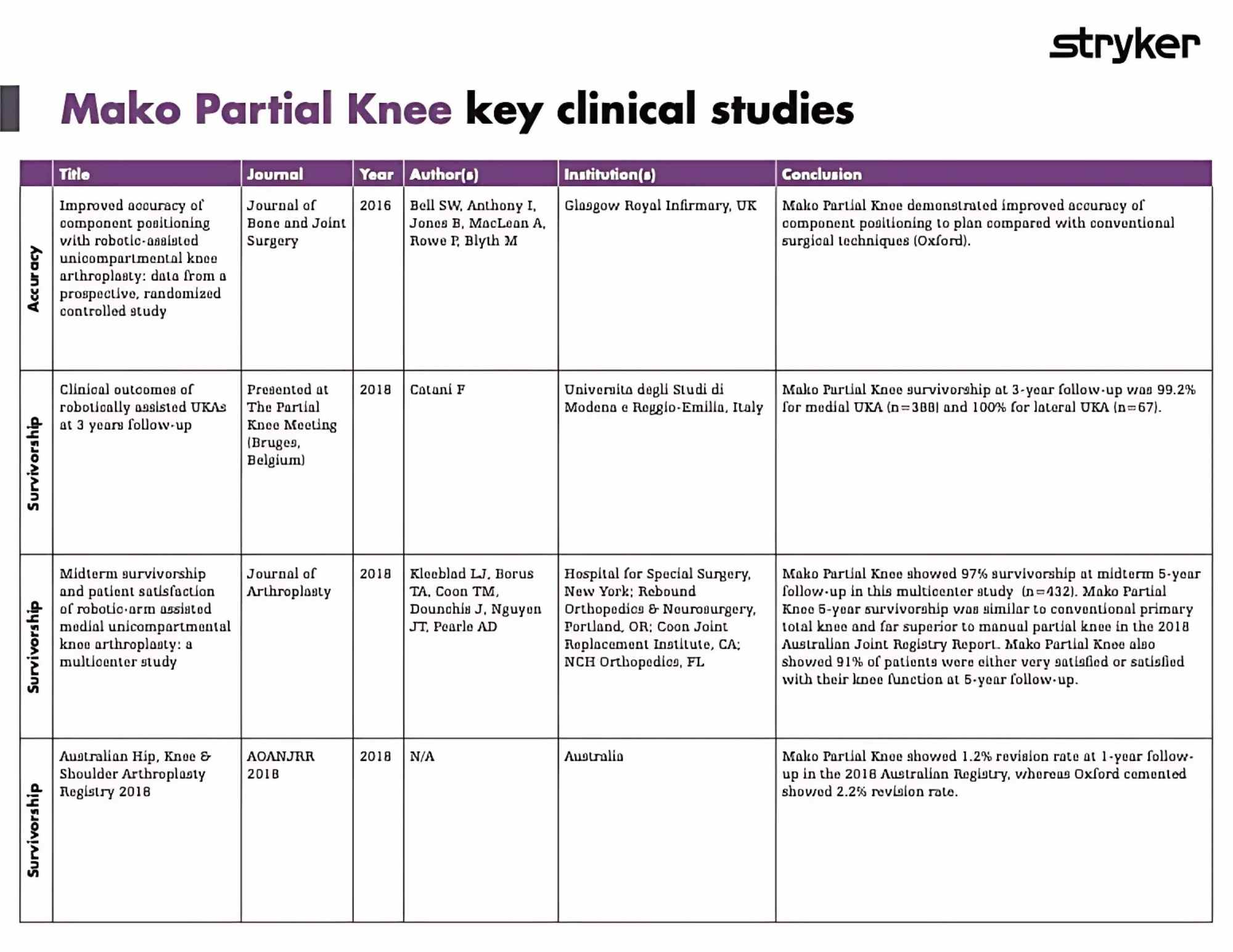
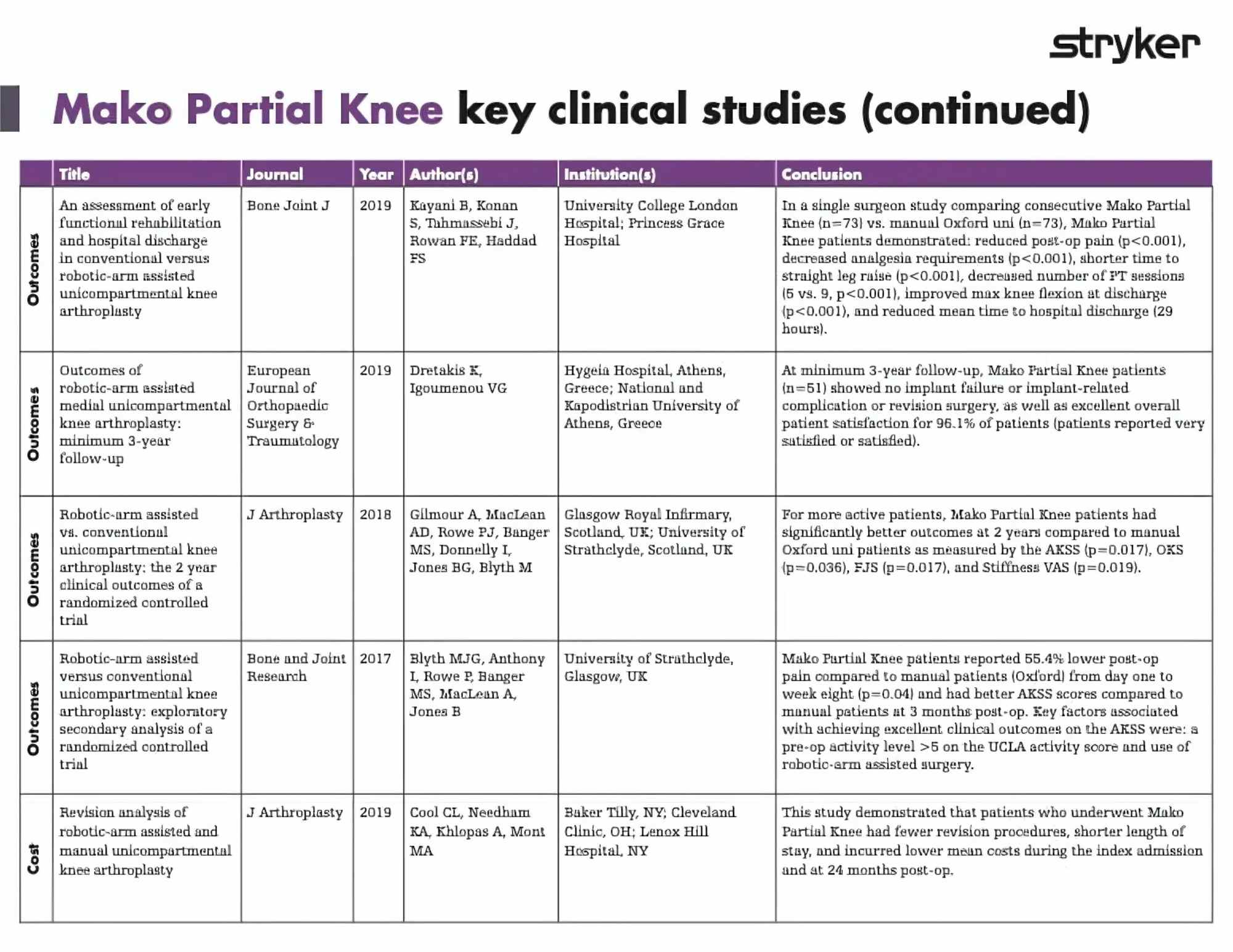
Selecting an orthopedic knee surgeon with experience performing partial knee replacement is crucial to a positive outcome. Dr. Prem Ramkumar is located in Long Beach and serves patients in Los Angeles, Orange County, and surrounding Southern California areas.